Dire Straits at the Hope & Anchor pub 1977 – new picture

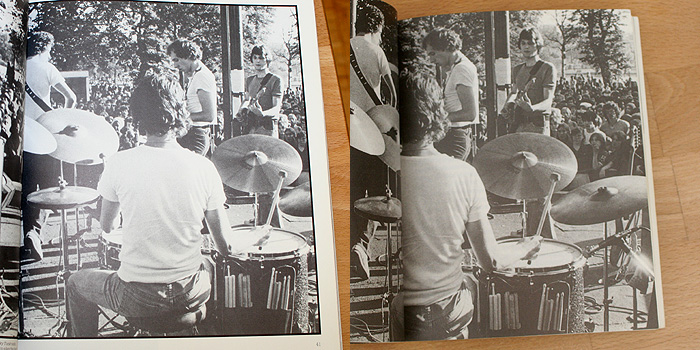
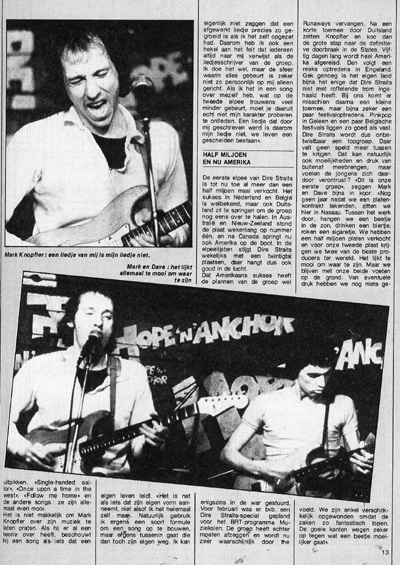
I recently got an old Dutch magazine called JOEPIE from February 1979 with a two-page story about Dire Straits. It features two pictures that show the band on stage at the Hope & Anchor pub. Dire Straits played there several times in late 1977: on September 10 (in the evening after  they played the Clapham Common gig in the afternoon of that same day), on November 4, 11, and 18, and on December 9 (when Eastbound Train was recorded, released as a b-side of the Sultans of Swing single).

It is not possible to tell from which of these gigs the pictures are but I am almost sure that it is not from the one in September (David’s hair is shorter than on the pictures we have from the Clapham Common gig earlier on the same day).

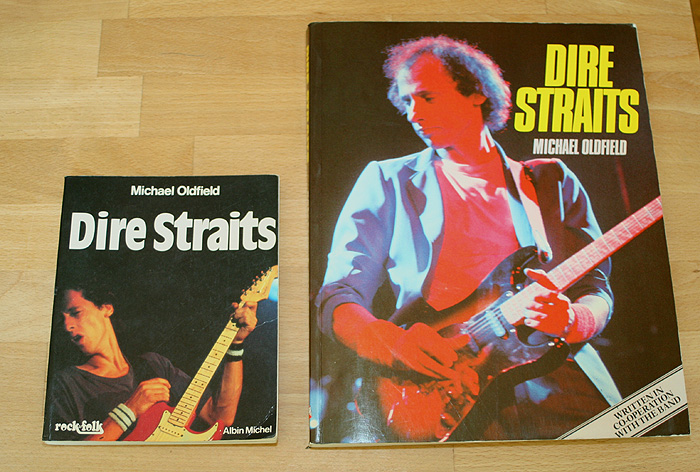
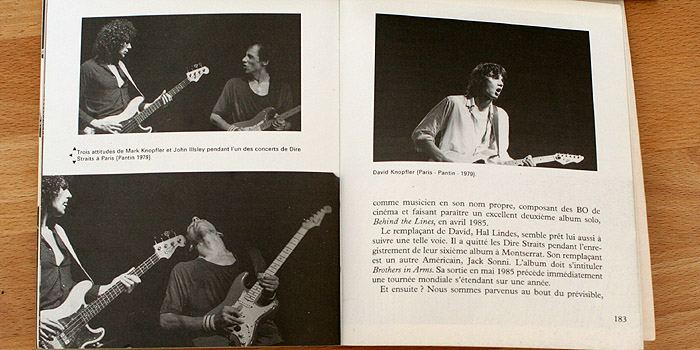
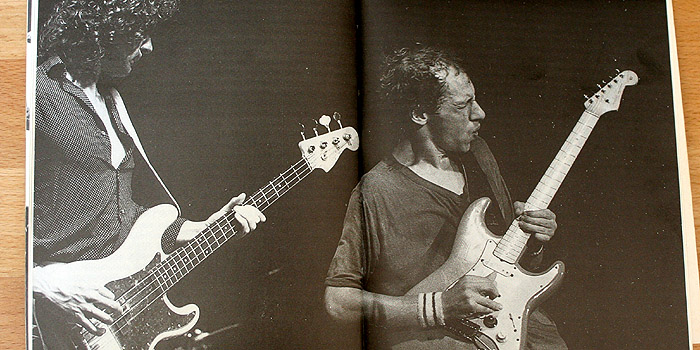
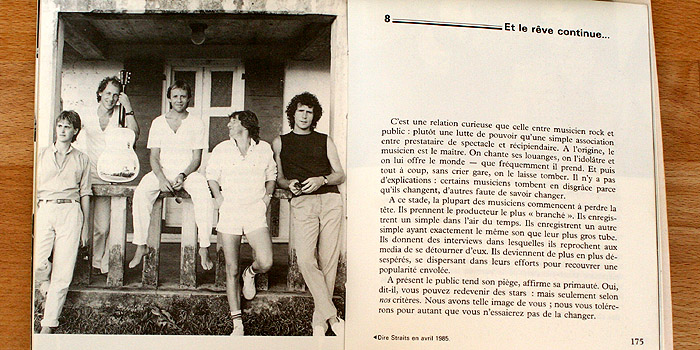
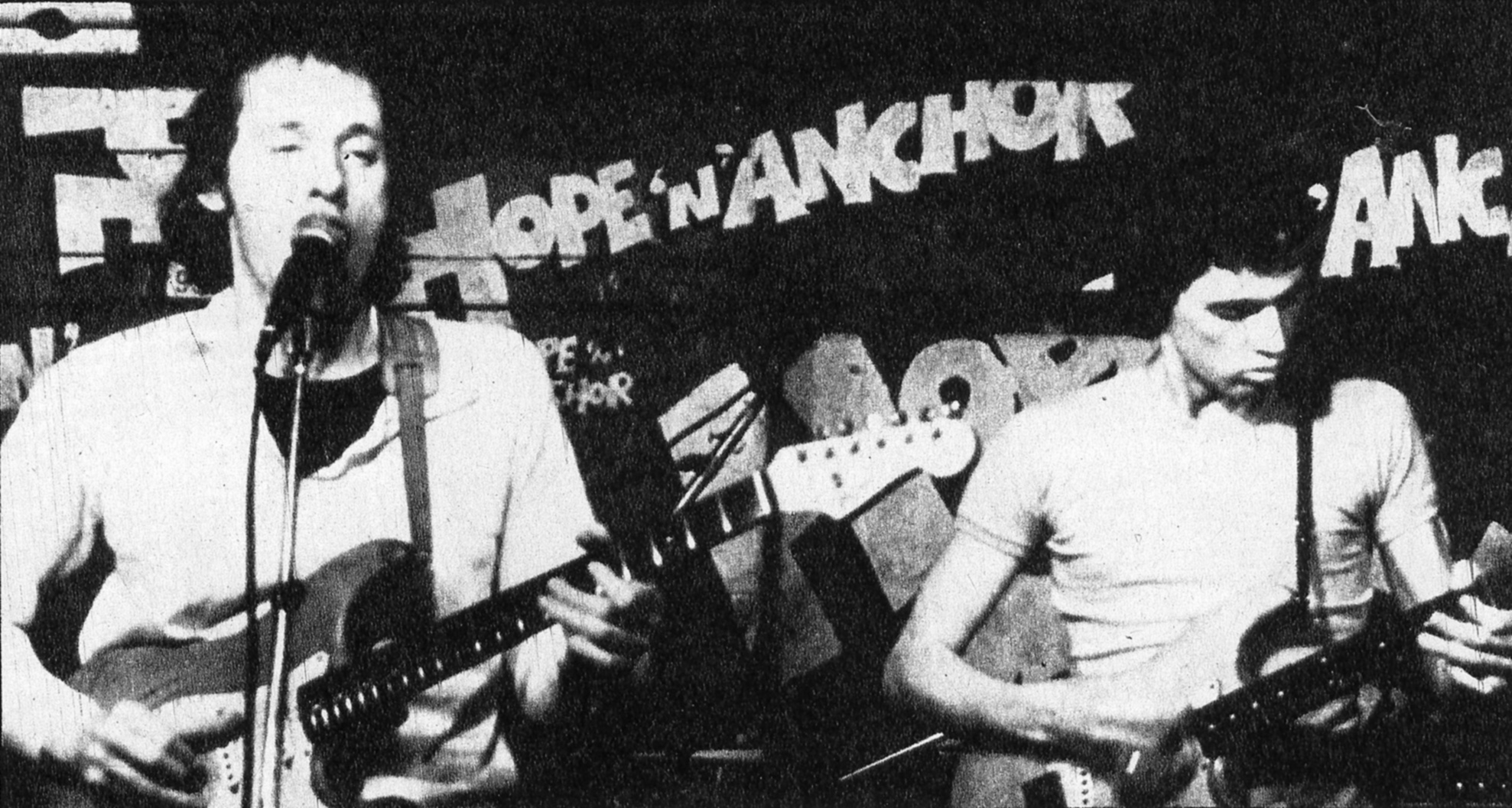
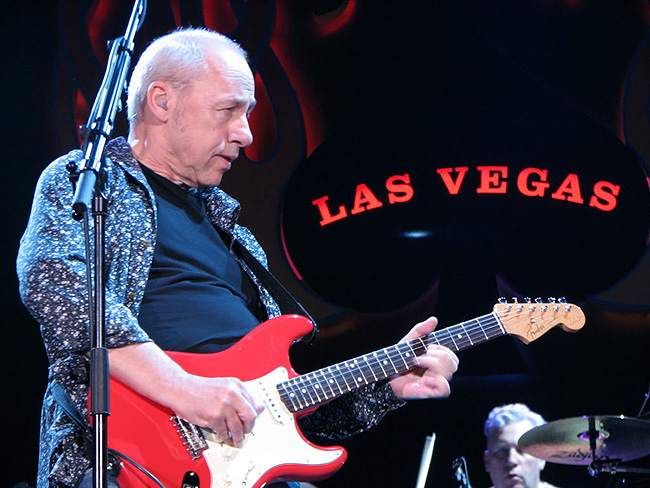
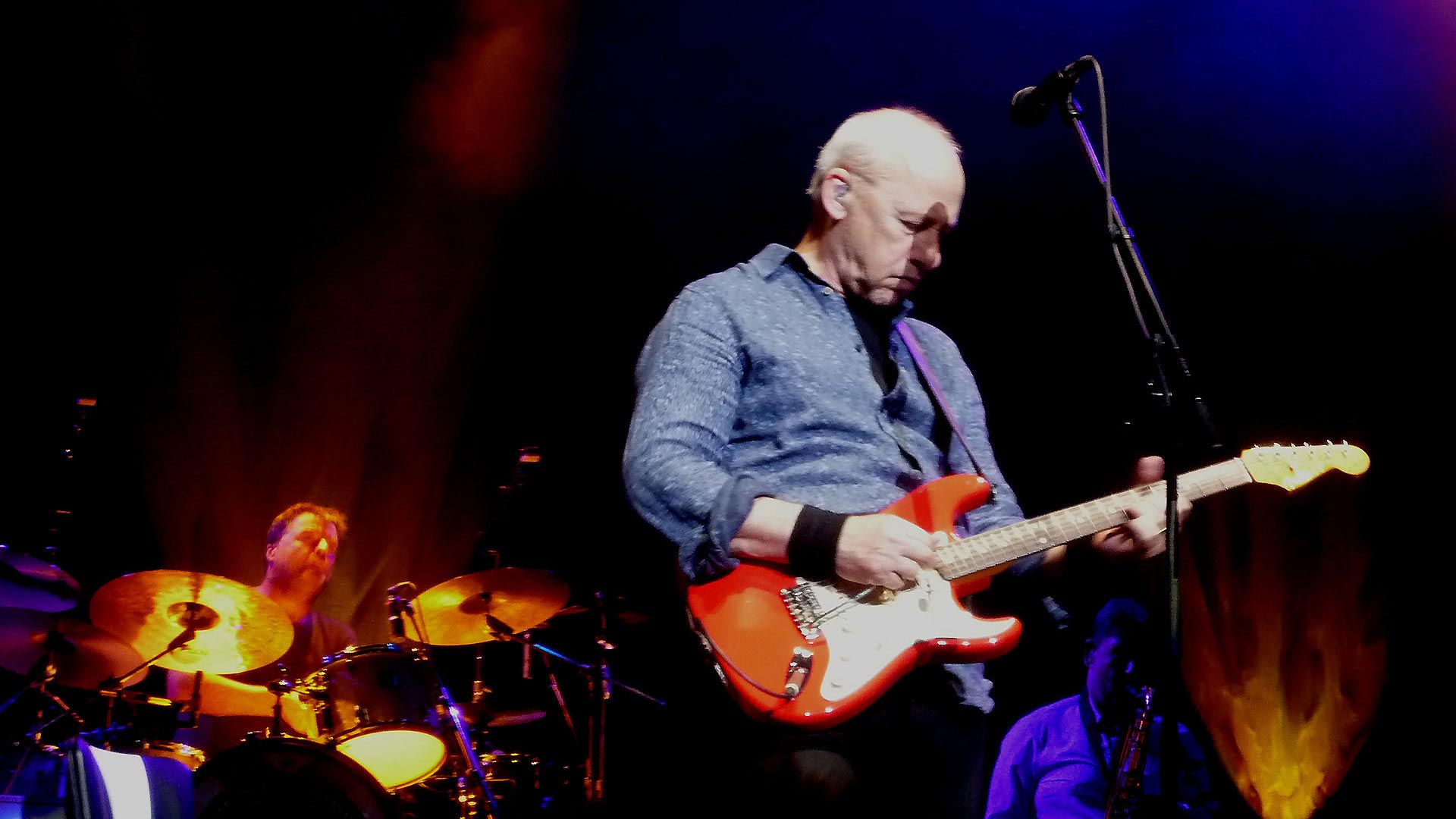
The first picture can also be found in the Dire Straits book by Michael Oldfield (which also features some more pictures of the same gig). It shows Mark with his 1961 Stratocaster, before the guitar was refinished to red. The guitar had a natural wood finish (possibly sealed with clear laquer). By the way, I know that this is the 1961 Strat because of a typical mark in the pickguard at the upper end of the middle pickup. The body does not have a strong attractive grain, like ash bodies normally have. It looks very much like alder which was the standard body wood at that time. Note that David’s guitar also had a natural finish, I strongly assume that both Strats were  refinished one year later, about summer 1978, Mark’s to red, David’s to black.

Here is the second picture that shows almost the whole guitar at higher resolution:

(click on the picture to enlarge)


Of the few pictures that show the guitar in the original condition  this is possibly the best we have. Unfortunately the quality is rather poor so we cannot see too many details of the guitar.In the lower right corner of the picture we probably see a part of an amp. I assume that this is David’s amp, the knobs look like Fender or Music Man. With the help of some imagination 😉 we might see a part of Mark’s Vibrolux amp between Mark and David, there might be the plug of the guitar cable and a few knobs (the Vibrolux has dark brown knobs without a silver center plate), but this might be illusion as well (any other amp than the Vibrolux would be real surprise at this period).

Mark Knopfler – Portobelle Belle – the only existing live video (Belfast 1996)

Although Portobelle Belle from Dire Straits’ second album Communiqué was played on so many tours,  it seemed that there are no live videos of this song at all. It was played e.g. on each gig of the Love over Gold tour in 1982/3 which ended in the Alchemy live video concert but just this song was not included on the Alchemy video, neither on the original vinyl album or CD, nor on the VHS tape or on the recently reissued DVD/blueray version (an incomplete audio version was included on the greatest hits compilation CD Money for Nothing).

It was just a few weeks ago that I found the following video on youtube which in fact seems to be the only video of this song. It is from the Golden Heart tour, Mark’s first tour as a solo artist after the Dire Straits era. The song “about a long gone Irish girl” was played mainly on the Irish gigs of this tour and Mark was joined by some Irish folk musicians on stage.

From a guitar player’s point of view it is interesting to watch this video because I was never sure whether Mark played the song with his right hand in a fixed position (playing with thumb and two fingers and the right hand resting on the other two fingers) or with his hand swinging freely like he normally does when playing rhythm. Unfortunately the quality of the video is not too good but as it looks Mark used a mish-mash approach of the two styles, playing mainly with thumb and two fingers but moving the whole hand at least on the upbeat strokes.

It is also intersting that this song was played in different keys over the years. Originally in C major it was shifted to D on the On Location tour in 1980/1 (played on different guitars like on a Rickenbacker, see this blog post),  then down to Bb on the Lover over Gold tour, and back to C on the On Every Street tour in 1991/2 (compare this video) or here in 1996.

Loaded pickguards now available in black

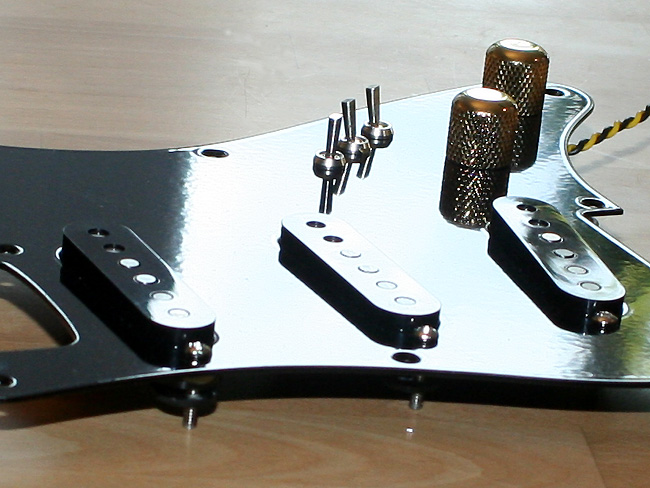
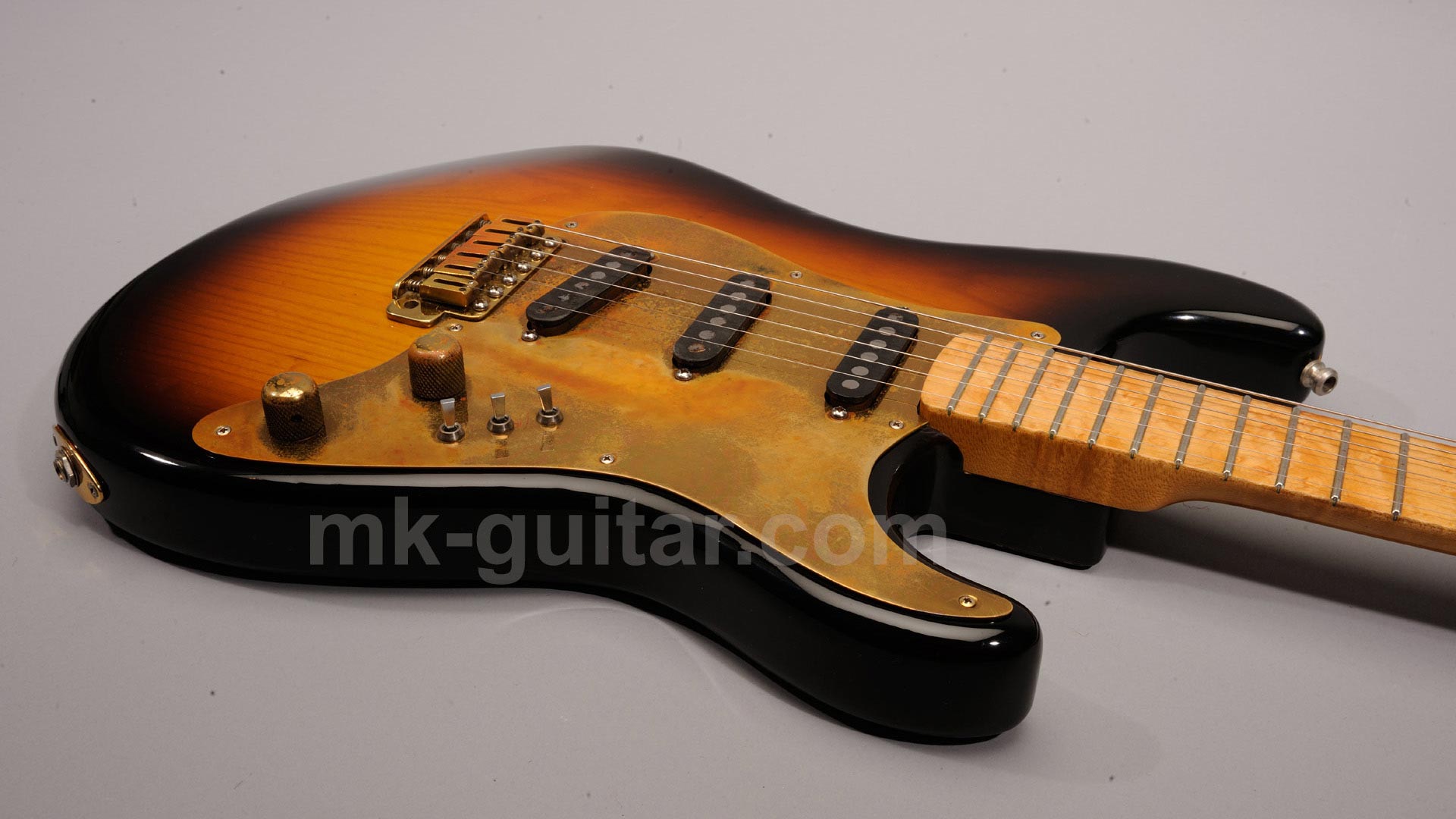
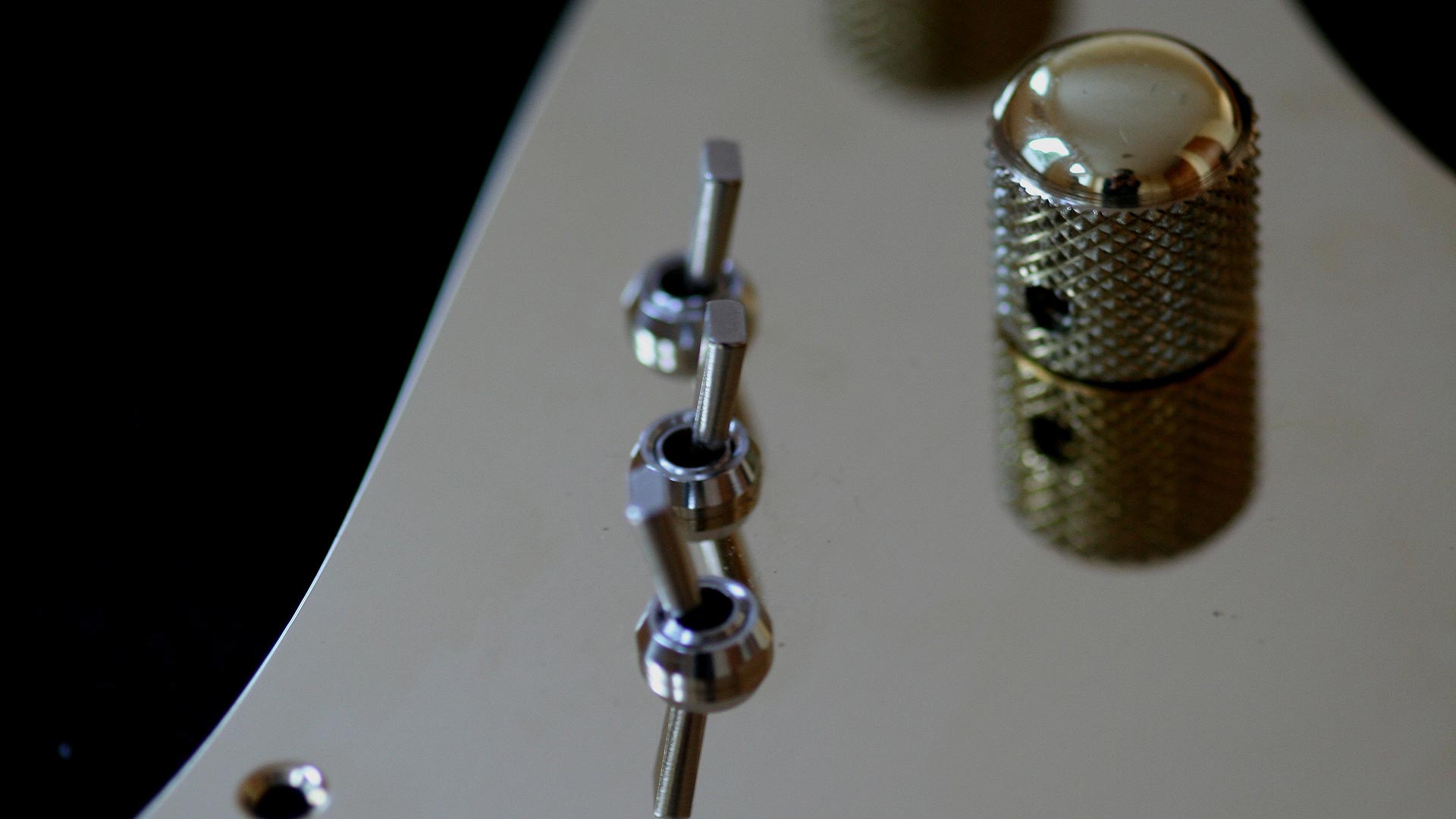
The loaded Strat pickguards in the vintage Schecter style have been available in brass and white aluminium for a while now, but from now on they are also available in black aluminium. You can chose between two versions: with the VFS-1 or the F500T-style pickups. As both are tapped pickups (two different sounds for each pickup), you will get 26 different pickup combinations and thus 26 different sounds.

The black ones are otherwise identical to the white version and have the same burnt-in enamel coating , the same high-quality toggle switches, the same extended-life quality potis, and of course the same sound. You can choose between three different metal knobs: chrome, gold, or black. The price is the same as for the white ones.

More info and more pictures in the mk-guitar.com online shop:
with Schecter-style pickups
with VFS-1 pickups

With the F500T-style pickups and chrome knobs
With the VFS-1 pickups and gold knobs

Tone King Imperial: Played on which songs?

According to Guy Fletcher, the songs on which Mark plays the Tone King Imperial are:

True love will never fade
Shangri la
Prairie wedding
Dark is the night/Donegan’s Gone
Postcards from Paraguay
Let It All Go

I guess this is meant to be true rather for the latest tours than for the studio albums (click here to find out what gear was used on them), and it matches what I described in this blog post:
Which songs of the Get Lucky tour are played with the Tone King Imperial? And what was the amp setting?

However, we can add the songs Prairie Wedding and Let it all go (which was only rarely played live, I think only on some of the small promo tours) to our previous list.

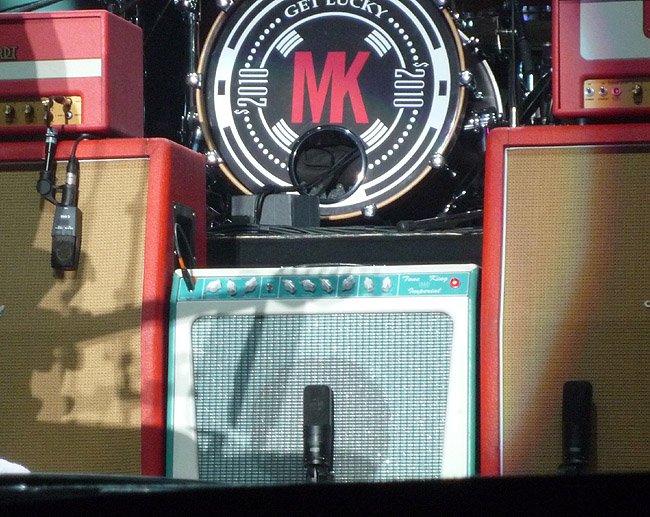
The Tone King Imperial on the 2010 tour

mk-guitar.com on Facebook

This site is on Facebook now: check it out here. From now on you can follow interesting news there as well, or simply  let the world  know that you like this site 🙂

I admit I am still rather new in the world of Facebook, and probably do not fully understand all possibilities and options of Facebook yet, but I am sure that good ideas will come after a start has been made (your input is – as always – appreciated!)

What are Mark Knopfler’s vintage guitars worth?

This week I visited the Frankfurt Music Fair, the world’s leading trade fair for the world of music. On one floor it featured a special vintage guitar exhibition where you could see lots of wonderful guitars, even most valuable guitars like Fenders and Gibsons from the fifties. I took many pictures of all kind of guitars, but with this blog post I would like to feature those which are similar to some of Mark’s guitars. Since many of the presented guitars were labelled with a price tag, the pictures will give you a good idea about the value of some of Mark’s guitars (if these would not be owned by him, as this alone surely multiplies their value).

But first some nice guitars without price:

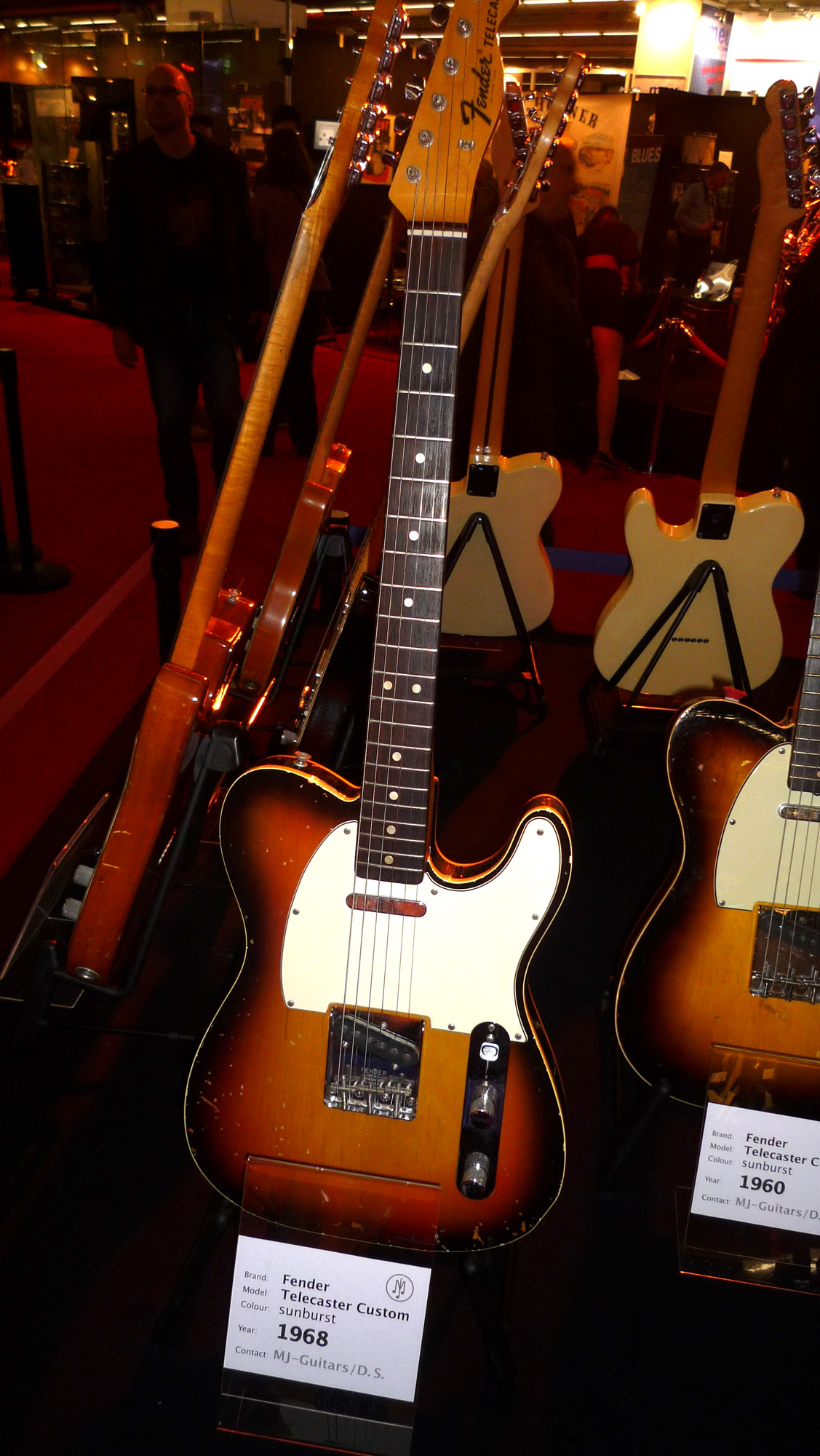
1968 Fender Telecaster Custom

1968 Fender Telecaster Custom (click to enlarge)

The Telecaster Custom in three-tone sunburst is really a beauty. It is similar to Mark’s, which is from 1966. While the normal Telecaster had an ash body, Customs were made of alder (the standard wood for the Stratocaster at that time). There is a binding on both the front and the back side of the body.

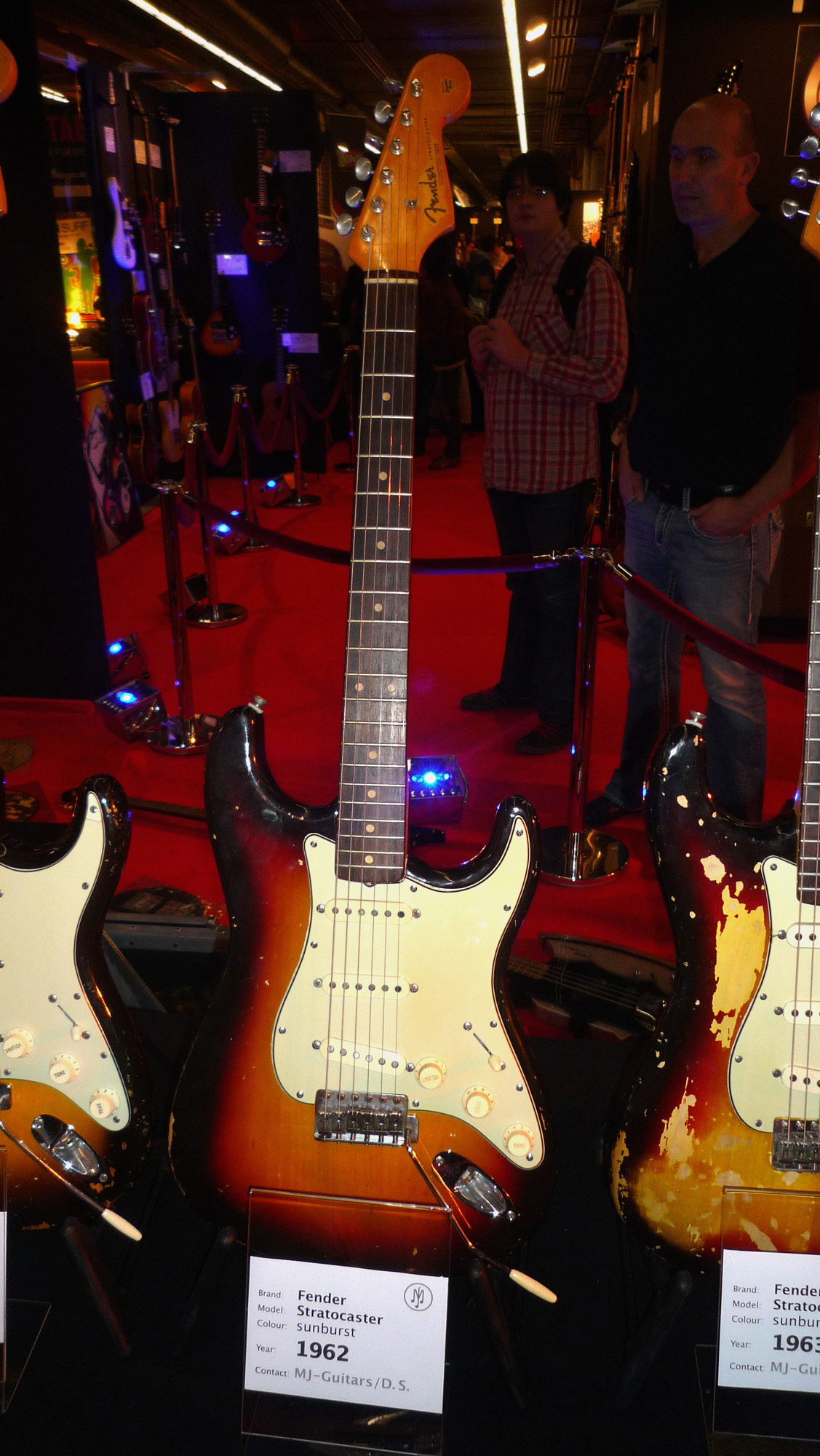
1962 Stratocaster

1962 Fender Stratocaster (click to enlarge)

Next we have a 1962 Strat, a guitar with the same specs as Mark’s #68354 Strat, his first red Strat on which he composed the final version of Sultans of Swing. While his was a bare wood finish when he got it (and was later painted red of course), this one is really light and has the standard sunburst finish of that time.

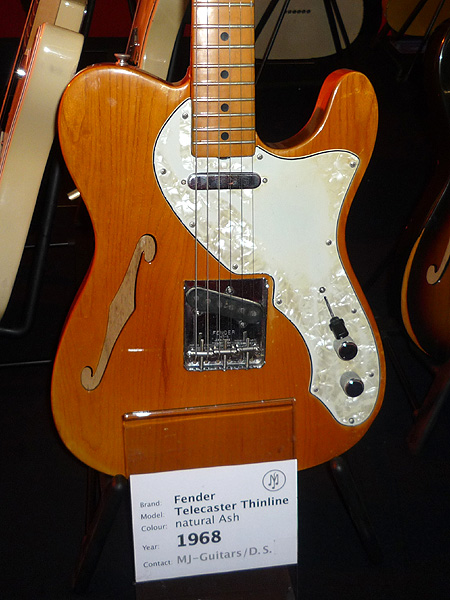
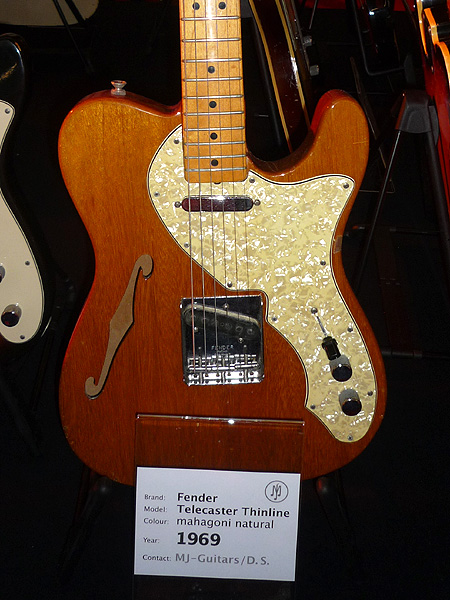
1968/1969 Telecaster Thinline

1968 Telecaster Thinline with ash body
1969 Telecaster Thinline with mahogany body

These Telecaster Thinlines were produced only in the late 60ies (later one had a humbucker pickup in the neck position). Mark played a black Thinline with the original Dire Straits setup on Water of Love , tuned to open A. Mark’s black finish was not original, also the f holes were closed before the paint job. Here is what they normally look like with their typical natural finish and the white pearloid pickguards (I guess Mark’s pickguard was also simply oversprayed with black). The Thinline was available with an ash and a mahogany body, see the pictures (we don’t know what Mark’s was).

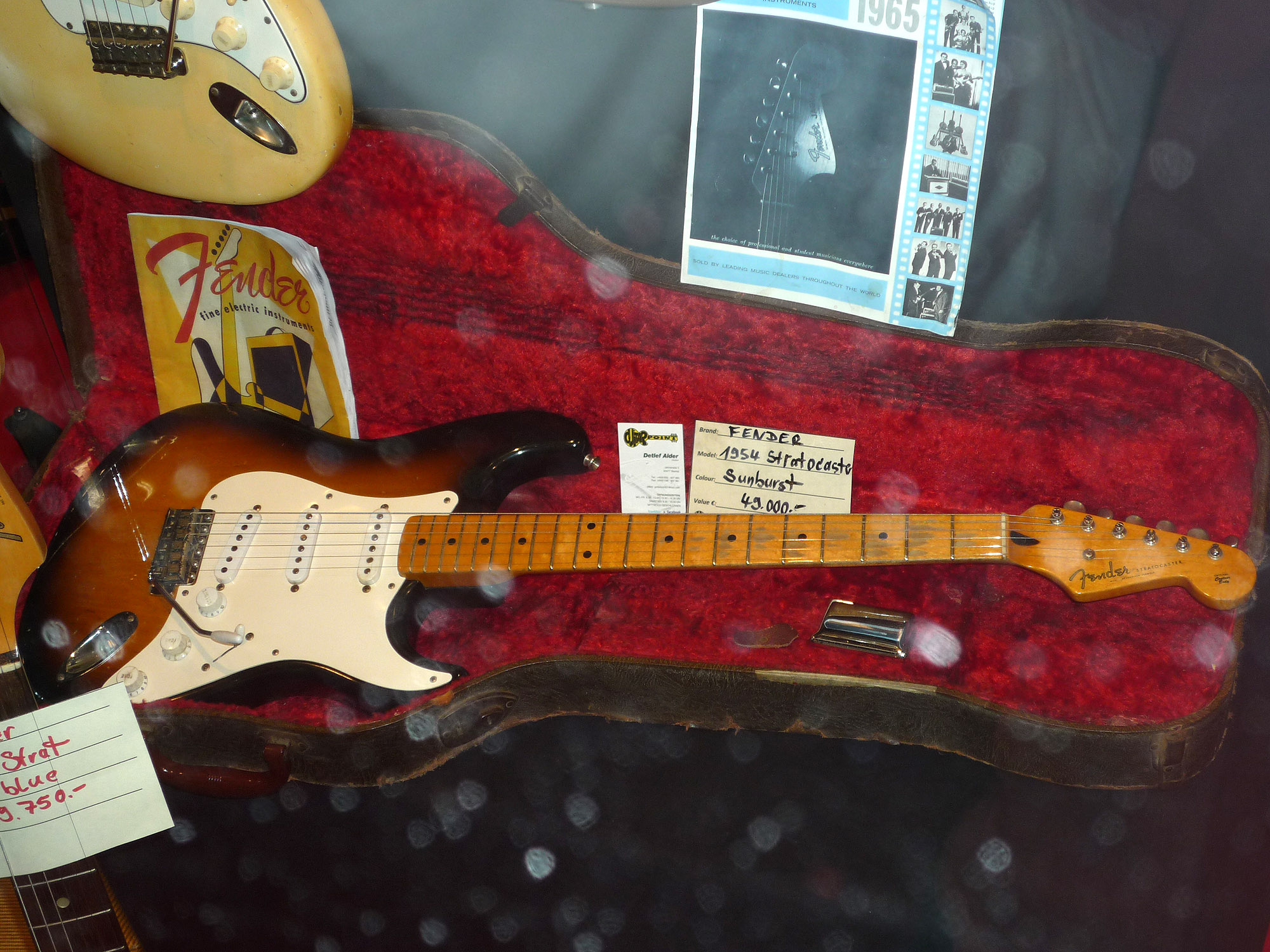
1954 Fender Stratocaster

1954 Stratocaster (click to enlarge)

Here we are starting with the “behind glass” guitars (thus the reflections in the picture). With a price tag of about 49,000 Euros the first-year-of-production Strats are – together with custom colour Strats from the 50ies – the most expensive Strats. This one is very similar to Mark’s 1954.

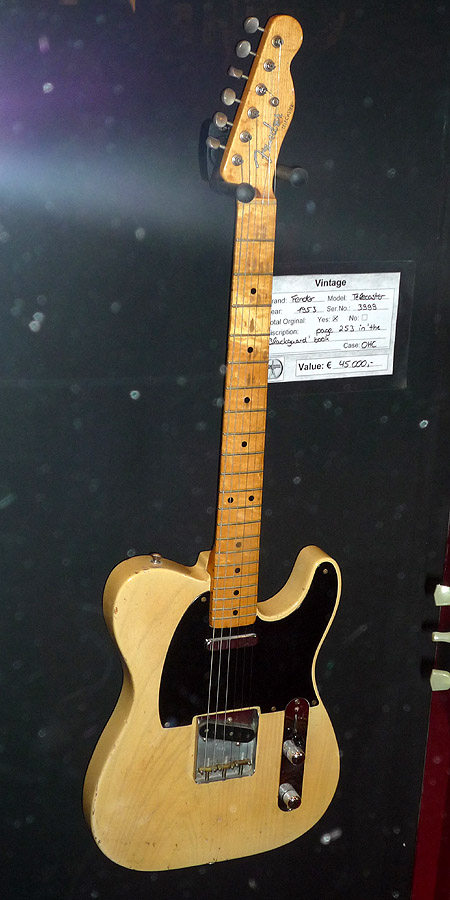
1953 Fender Telecaster

1953 blond Telecaster

A Telecaster very similar to Mark’s 1954 Telecaster. The finish in these years looks a bit different than the typical butterscotch of the Tele at that time. In fact the finish was probably the same but the kind of clear nitro overcoat in these years became less yellow than on the butterscotch Teles. The price tag of this guitar reads 45,000 Euros.

1958 Les Paul Standard

1958 Les Paul Standard (click to enlarge)

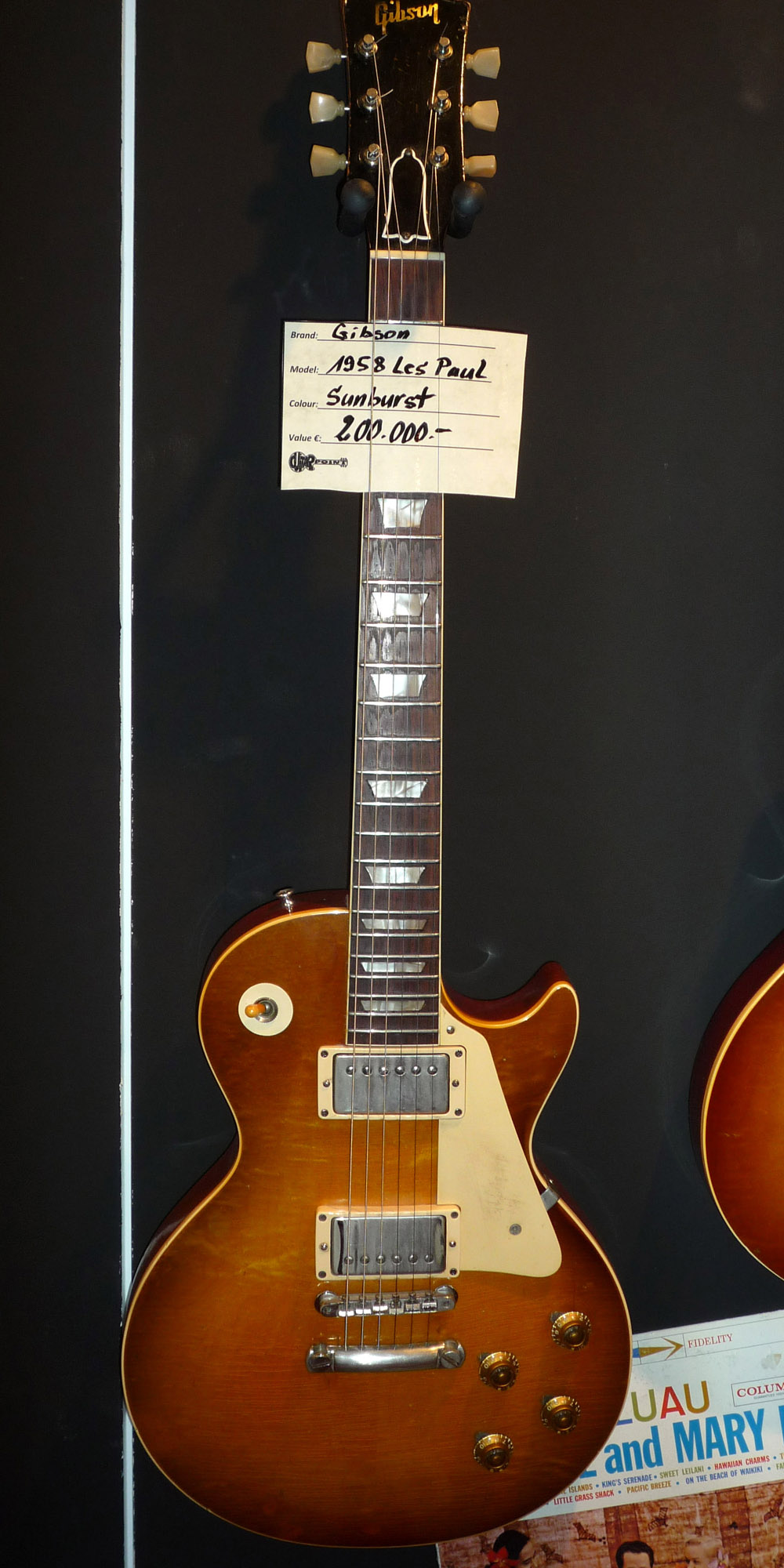
An original 1958 Les Paul Standard – 200,000 Euros, very similar to Mark’s.

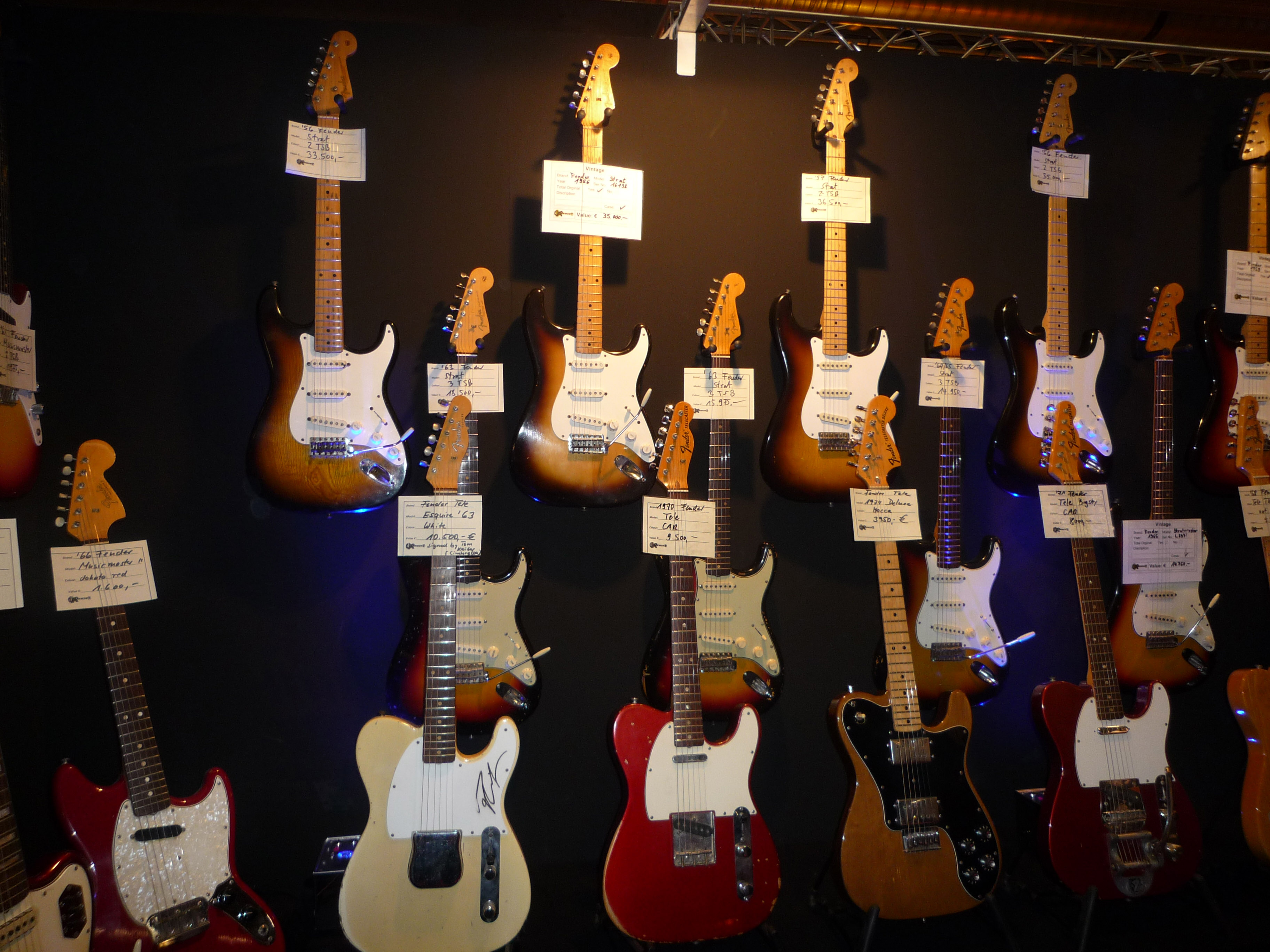
Finally, a group picture of some nice Fender guitars…

Vintage Fender guitars (click to enlarge)

The Hotcake overdrive pedal

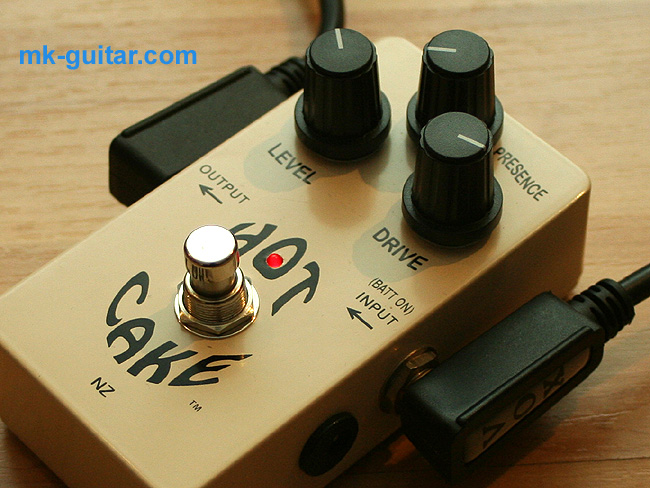
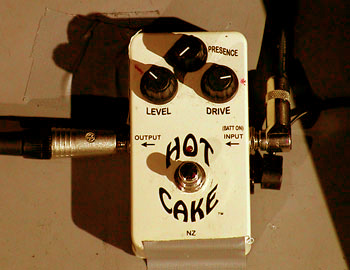
From now on you can buy the Hotcake overdrive pedal in our online shop. This is the overdrive pedal that Mark Knopfler used on his 2005 Shangri-La tour, and probably on other occasions as well. The Hotcake is built by Paul Crowther in New Zealand since 1976. It has a best reputation among players around the world – Stevie Ray Vaughn also played one.

For us Mark Knopfler fans it is obvious that it can only be good – why else should Mark, who can surely afford any pedal in the world,  have chosen the Hotcake? In very short, it IS good because (a) it sounds good and (b) it is a high-quality product, made of best component. It is reliable, has a low noise floor, and is very stable.

What I really like about it is that it does not alter your clean sound, unlike other overdrive units that even with minimum (or no) distortion totally change your tone. With the drive control down, the Hotcake is totally clean, and your sound is identical to what it is without. For this reason it is also ideal to boost your guitar signal to get more drive from a tube amp.

Mark Knopfler's Hotcake from the 2005 tour, the settings are for the song Boom like that

When you turn up the drive control you get any desired amount of distortion, starting with a subtle crunch, over a creamy overdrive (picture 4 shows Knopfler’s setting for the song Boom like that), to a fat and thick distortion. In fact even with a single coil guitar and the drive at maximum you get much more distortion than with typical tube screamers.

Mark never used many stomp boxed, on the 2005 tour he had just an Ernie Ball volume pedal and the Hotcake

The sound is really as you hear e.g. on the 2005 tour, just listen to the crunch of Mark’s Silvertone guitar on Boom like that. I will try to make some sound clips or a demo video soon.
Check it out in the online shop

Mark Knopfler Gear Database: first pages online plus possibility to upload your own pictures

The first (today: nine) pages with Mark Knopfler guitars are online. I started with some Strats (mainly the most important ones) and also finished the ones about his 1958 and 1959 Les Pauls.

I also included the option to upload your own pictures for each guitar at the bottom of the pages. If many will do, we might soon have a nice picture gallery for each guitar. After approval (to avoid spam pictures or mistakes) they will appear in the user gallery there. You can also leave a description for each picture, which might include the date and venue, or the name of who submitted it. You don’t have to register to upload pictures.

They all look the same – How to tell Mark Knopfler’s different signature Strats apart

While working on the new gear database – especially on the pages about the different MK Signature Strats – I felt it difficult to tell from a picture which of his different signature Strats it is  (Mark used alone three of these on the 2008 tour, and generally seems to use even more here and there). So I had to dig a bit deeper into the numerous pictures and viceo clips to find any hints how to distinguish between these. What was finally most helpful was Guy Fletcher’s video interview with Glenn Saggers, Mark’s guitar technician, in which we see the three MK sig Strats one next to the other.

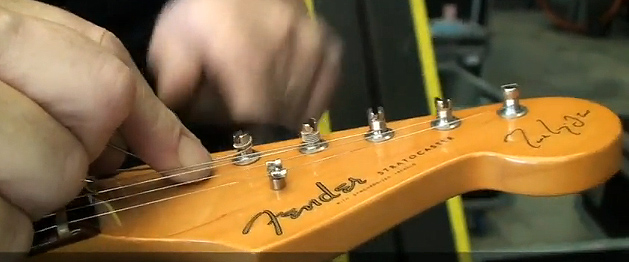
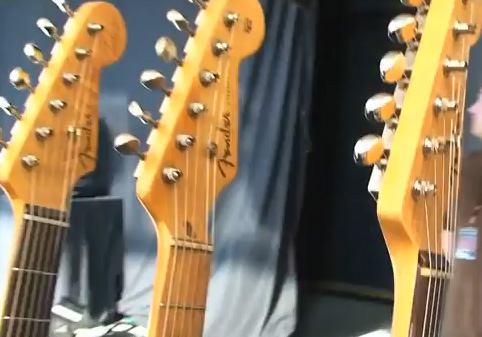
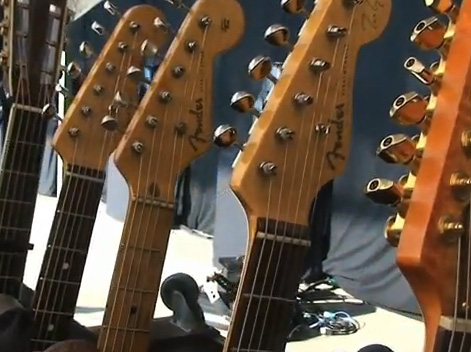
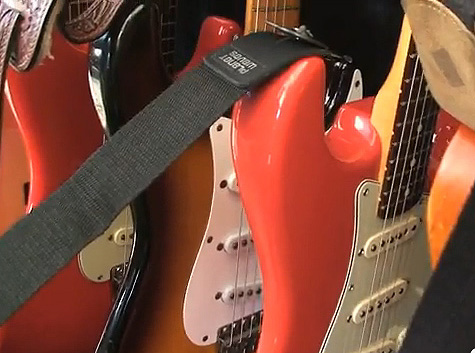
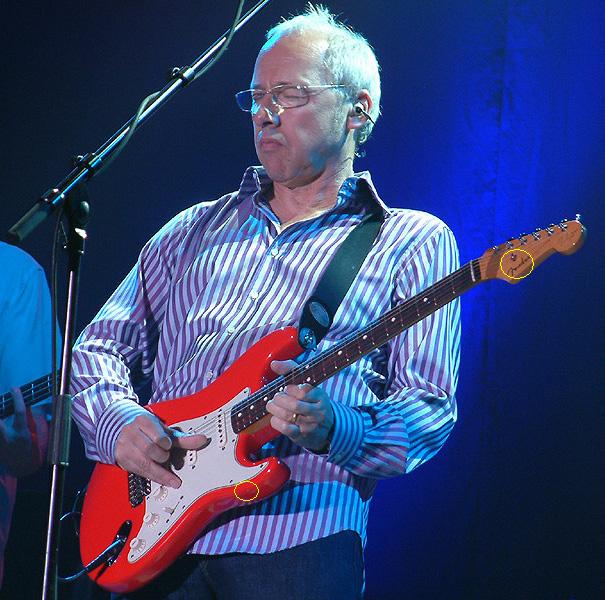
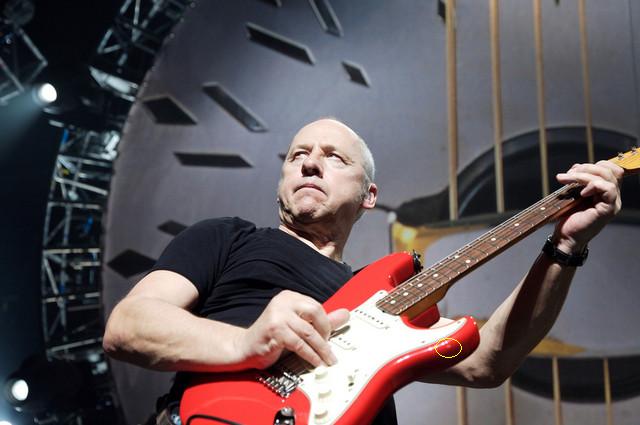
Generally, they almost look the same, although e.g. one of them – which was borrowed from Mark’s bass player Glen Worf – has a different, lighter colour – but even this is almost impossible to see with all the lights on  stage pictures. One thing that is abit different on all Strats is the exact position of the Fender decal as this water slide decal is placed by hand on the headstock, and the position might vary up to half an inch or so. Similarly, the position of the string butterfly that holds down the e and b strings, and the position of the Mark Knopfler signature decal vary to some extent. With the help of these positions you can clearly tell from a (good!) picture which guitar you see. Take a look at the following pictures demonstrate  what I mean.

Mark Knopfler Signature Strat SE 00000 (2nd from left) - Note the string holder that is almost on the height of the tuner for the a string
The “d” of the word “Fender” is towards the d string tuner, there is a noticably gap between the string holder and the “d”
Mark Knopfler Signature Strat SE00001 (left) - Note how close together the string holder and the "d" of "Fender" are, the "d" is roughly in the middle between the a and d string tuners.
Glen Worf's MK Signature Strat (2nd from right) - note how the string holder and the "d" of Fender are also close together, but the "d" is more towards the d string tuner.
Glen Worf's guitar is lighter than the other Signature Strats - however this can only be seen on pictures when both are next to each other
The hints discussed in the previous pictures clearly show that this is Mark's SE00000 Strat. Besides the rather long distance between the string holder and the "d" in "Fender", this guitar can also be identified with a little ding at the side near the lower cutaway (in the centre of the circle)
Although we cannot see the decal here, the ding (circle) tells that this is again SE00000.
The sring holder and the "d" are close together and towards the d string tuner - this is Glen Worf's MK Signature Strat. Note that the decal with Knopfler's signature is also at a slightly different position, more towards the floor.

New Mark Knopfler Gear Database started

I finally decided to start  a new database for all the Mark Knopfler gear that was used over the years. This will take surely several weeks (or even months), and finally will be a never-ending progress.

The idea is to have one dedicated page for each guitar/amp/effect that holds all info we have on that guitar/amp/effect. As each page has the possibility to add reader  comments (at the bottom of the page), everyone – even without being registered – can add relevant info that is not included yet. I will then regularly add these pieces of information into the page itself but will leave all comments so that the author and the origin of all information will be documented and remains visible. So please all help with your input to create something that one single person alone would not be able to.

You can access the database from the navigation bar on top of the page (“Mark Knopfler gear database”) or from the sidebar (under “Pages”), or for now here (at this very moment only a handful of  Strats have been finished. So, if you have good ideas for improvements, now would be the right time as it should be possibly to add these easily at this early stage.

Click on the screenshot to enter the gear databse

Me and (mainly) Jean-Francois already started a “which guitar/amp/effect on which song” database some time ago (find it here). I always felt the problem that this alone did not make too much sense since we could not link from the piece of gear like e.g. the guitar mentioned there to a page with info on that guitar, but now things start to go together.

By the way, I recently moved the whole site from mk-guitar.com/blog/ to mk-guitar.com (your links and bookmarks that point to /blog/ should be redirected to the new address automatically) – just to let you know.