
New Theory on the Sultans of Swing Sound: DiMarzio FS-1 Pickup in the Middle Position
Mark Knopfler’s guitar sound on the first two Dire Straits albums is firmly associated to the 1 & 2 position (bridge & middle) of the 5-way switch. This position causes a special, nasal “out of phase” sound. The term out of phase is technically incorrect as both pickups are still in phase but – similar to a true out of phase wiring – certain frequencies are cancelled or at least decreased and others boosted so that the resulting sound of both pickups together is totally different from the sound of a single pickup.
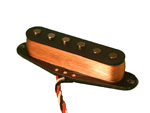
In one of his two red Fender Strats Mark had a DiMarzio FS-1 pickup (confirmed in a Guitar Player interview from early 1979).
He often swapped the pickguards of his two Strats at this time, so the one with the DiMarzion was found on both his rosewood and maple neck Strat.
This DiMarzio pickup can be heard in the neck position on countless bootleg live recordings of the original Dire Straits setup. It has a louder, warmer and fatter sound which on stage Mark played on songs like Single Handed Sailor, Once Upon a Time in the West (only live versions), Follow me Home (live), or sometimes on Wild West End (live). He also liked to switch to the hotter FS-1 sound just for the solo, e.g. on Sultans of Swing (live in late 1978), or Where Do You Think You’re Going.
The FS-1 in the Middle Position
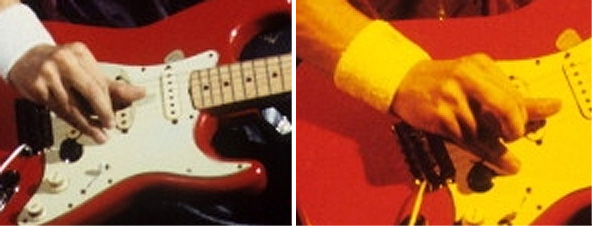
Both the stock vintage Fender pickups and the DiMarzio FS-1 have staggered pole pieces (the stagger on the FS-1 is a bit different), for this reason they are hard to distinguish on pictures. However, the pole pieces of the FS-1 – then in 1978 being rather new compared to his 1961 Fender pickups – are shinier than the old corroded Fender pickups.
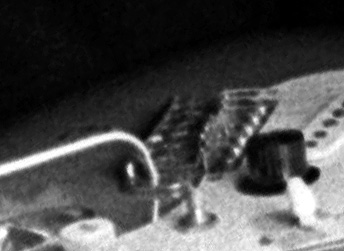
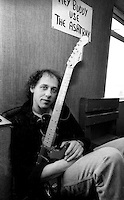
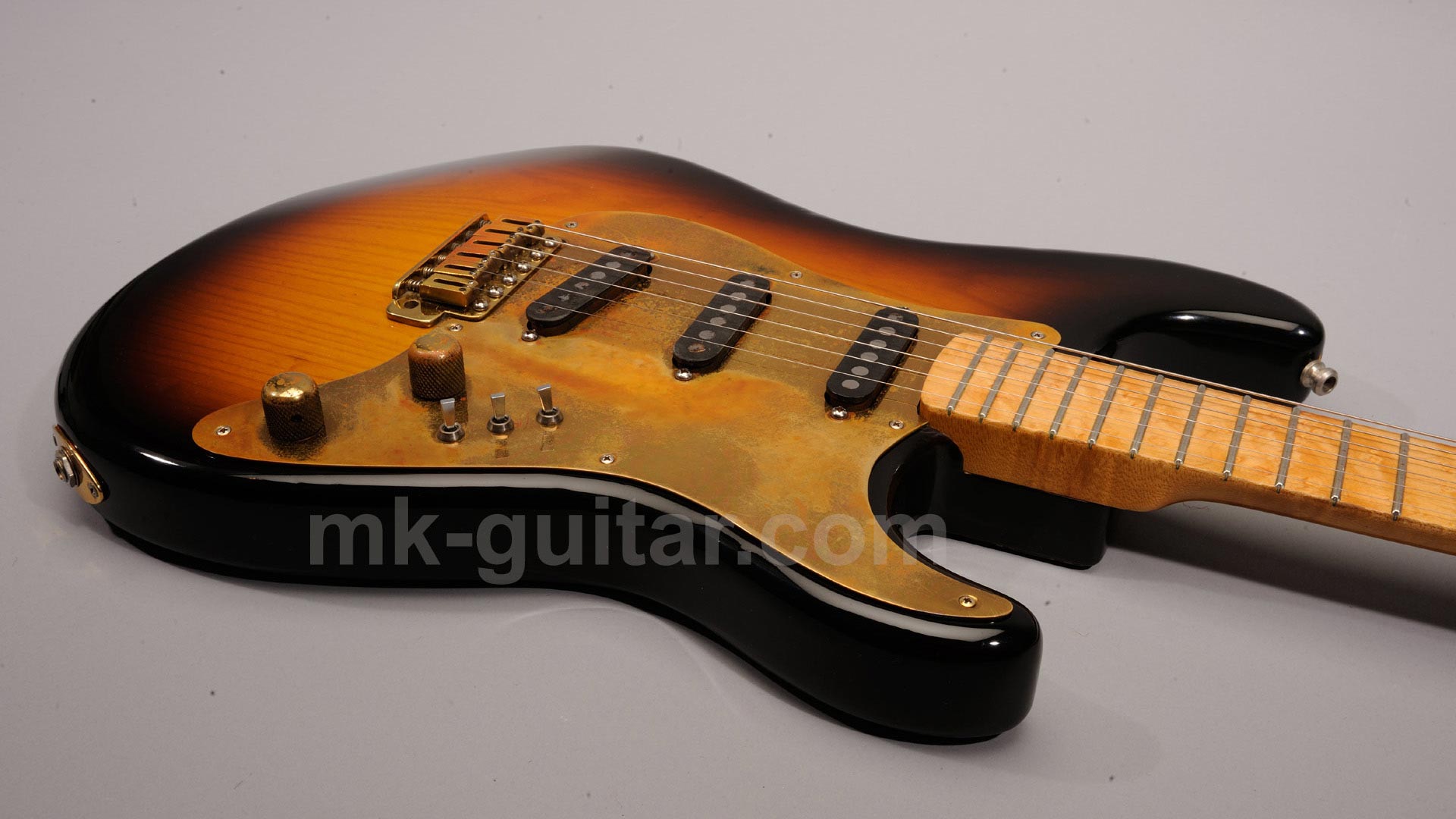
I recently was watching a picture (below) of Mark’s maple neck Strat from early 1978 (backstage at the Marquee club). The guitar had the pickguard that came of his 1961 rosewood Strat (the one that often had a black volume knob), the pickguard normally with the DiMarzio. I clearly had the impression that there is a stock Fender pickup (with corroded, slightly bevelled pole pieces) in the neck position. Instead, the middle pickup looks much newer and might be the FS-1.
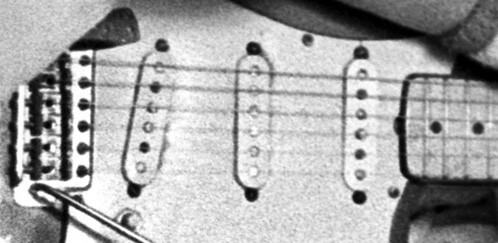
The picture quality is too bad to be a real proof but at least it is a hint. When thinking about it I realized that on all the live recordings with this pickguard from that time (Chester, Birmingham, London BBC, Revolver TV, Greenwich rehearsals) there is not one single example where Mark plays the neck pickup (!). All 1978 concerts on which he plays the neck pickup (in fact astonishingly often) are after October 1978 (Hamburg, Amsterdam, Paris Chorus TV) , just after his 1961 was refinished to red. So I assume the DiMarzio moved into the neck position at the break when the 1961 Strat was refinished.
OK, no neck pickup on the summer 1978 gigs. So the next question was, can we hear the middle pickup alone on any recording from that period? If it was the FS-1, the sound should be fatter than normally. If not, it might have been a stock Fender pickup in the middle, and the FS-1 was purchased in late 1978.
A song that normally was played with the middle pickup (compare e.g. the Rockpalast video from 1979) was What’s the Matter with you, Baby. And in fact, there is an ultra-fat middle pickup sound on this song on the recording from Birmimgham, Barbarellas club ( July 4, 1978).
The only other existing recording with this song from this period is the one from London (“Live at the BBC” CD). On this concert the guitar sound is extremely bright. What’s the Matter with you, Baby was also played but does not seem as fat as on the Barbarellas gig. But when a/b compared with the other songs it becomes clear that it is the middle pickup and that there also is less treble but more distortion than on the the other songs. Likewise, you can compare Water of Love from these recordings with What’s the Matter with you, Baby to find that the sound is fatter on the second – generally, a stock Fender Strat pickup is about as loud and bright as the neck Telecaster pickup on Water of Love, or even brighter (the metal cap on the Tele reduces treble), not so here.
Another song that seem to feature the middle pickup is Lions. Mark sometimes played the intro or middle solo with the middle position (sometimes even the bridge position. There is a video of Lions live at the BBC Whistle test, and the sound is also astonishingly fat and warm here.
The DiMarzio FS-1 and the in-between (1 & 2) Position
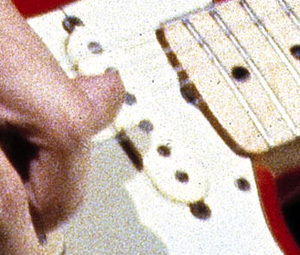
While the DiMarzio alone sounds totally different from a Fender pickup, it also changes the in-between sound (bridge & middle, 1 & 2 ) significantly. The interesting thing here is that the 1 & 2 sound will not become fatter and warmer, but sharper and less nasal. This is because the high frequencies do not cancel themselves to that typical nasal Strat tone as they do with two identical pickups. Instead, the 6k ohms Strat pickup and the 13k DiMarzio blend differently. The sound is more like the sum of both: the warm midrange from the middle pickup plus clear treble from the bridge pickup. I see this as the formula for Sultans of Swing on the first CD. The sound on this song is noticably different from most others of the first album. I assume he plays the 1961 Strat (he calls it his Sultans Strat…) on Sultans, and possibly the maple neck with its original pickguard (probably with three Fender vintage pickups) on most other songs ( This makes sense as he favoured this guitar on the previous tour with the Talking Heads directly before recording the first album).
On all 1978 pictures and videos after the recording of the album, we see him with the maple neck Strat which then has the 1961 pickguard of the rosewood Strat (with the DiMarzio), until in October 1978 he plays the rosewood 1961 Strat, with its own 1961 pickguard again, and the DiMarzio now in the neck position.
The 1 & 2 sound of Sultans of Swing (first album) and on all live recordings (e.g. Live at the BBC) after the album and before October 1978 feature the DiMarzio FS-1 in the middle position.
After October 1978, the DiMarzio moved to the neck position and the 1 & 2 sound became “normal” then (compare e.g. the Rotterdam 1978 bootleg).
I myself already found out that the sound of the DiMarzio in the neck position plus the Fender in the middle (3 & 4 position) is similar to the Sultans sound so that I used this for the Puresolo competition some time ago. With the DiMarzio in the middle and a stock Fender at the bridge, it sounds even more original to me.
(Youtube video demo / sound demo to come)
The VFS-1 as the ideal pickup for the early Dire Straits tone
With what was said before, it seems difficult to obtain all the different sounds of the first two albums and the live gigs from this era, as these require different pickup setups:
** three Fender vintage pickups (all that was played with the original pickguard of the maple neck Strat, e.g. many songs of the first album, the January 1978 tour with the Live at Leeds or at the Roundhouse bootlegs, the early 1979 concerts like Rockpalast,…)
** a DiMarzio FS- 1 in the middle (1961 pickguard before October 1978, e.g. Sultans of Swing (album), Live at the BBC, Live at the BBC Whistle Test,..)
** the DiMarzio FS-1 in the neck position (1961 pickguard from October 1978 on, e.g. Single Handed Sailor (Communique), the late 1978 concerts and all other live recordings from March 1979 on)
What we ideally need is a pickup that can be switched from vintage sound to DiMarzio sound, to put this one in the middle and the neck position. Then we can get all sounds mentioned before. Dreaming? No, this pickup already exists – the VFS-1, which I designed myself exactly for this purpose (this Youtube video compares it to a vintage pickup and to the DiMarzio pickup.
The VFS-1 is a tapped pickup (two different sounds switchable) made to my specs exclusively for me by Germany’s high-quality pickup guru Harry Haeussel. I have been offering it with the loaded Schecter-style pickguards for some time now, as it is also ideal to get the Alchemy sounds without loosing the option for fatter sounds and the 26 sound combinations of the three mini switches on a Schecter vintage pickguard. I also recommended it for the neck position to get the DiMarzio sound or the vintage sound for early Dire Straits tones. But now, with the DiMarzio FS-1 in the middle and its effect on the 1 & 2 sound, it really becomes the ultimate sound tool.
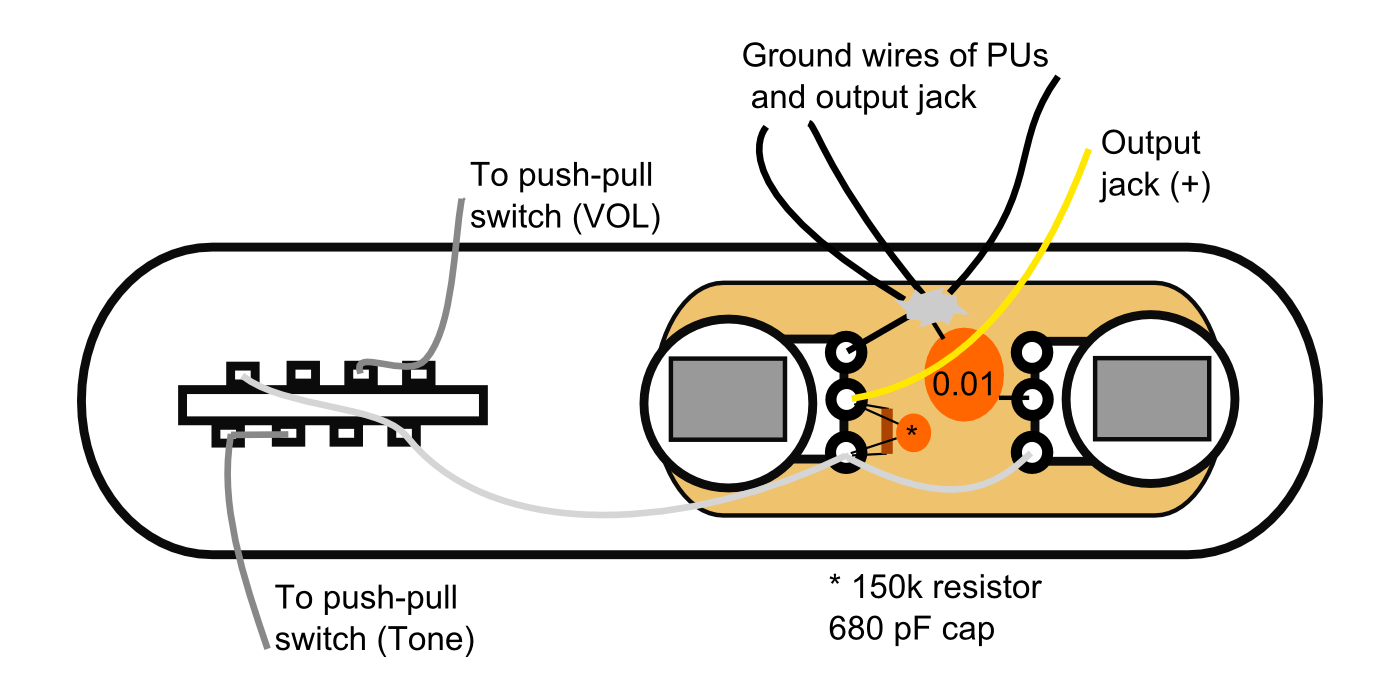
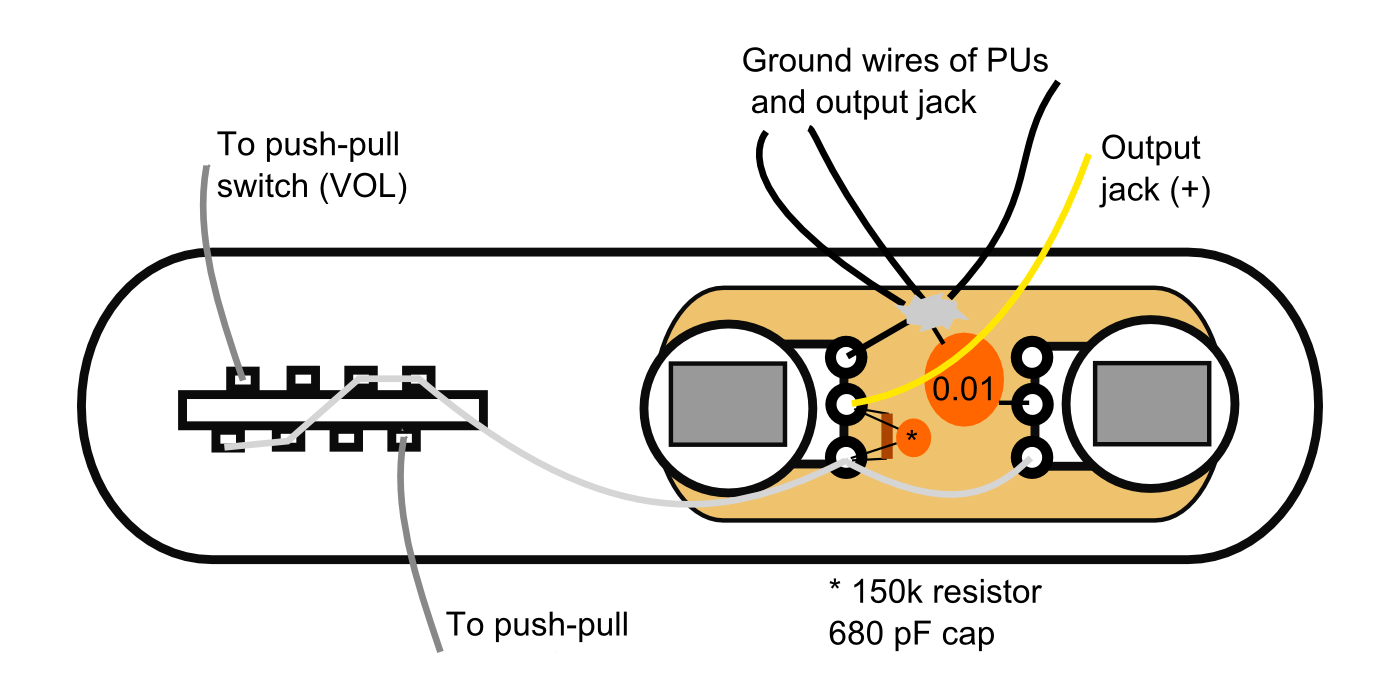
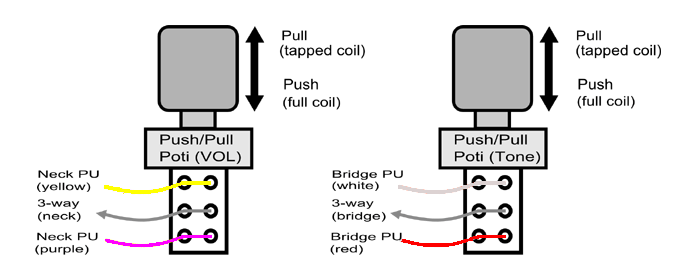
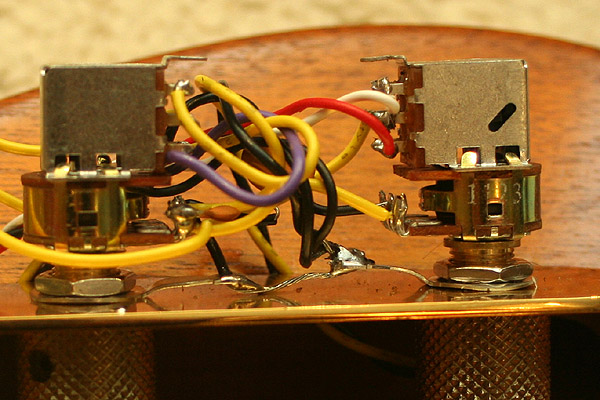
Without the three mini switches (with up, off, down positions each) the two sounds of a VFS-1 can be switched with e.g. a push/pull poti. Note that you can wire the push/pull switch as you want to make the fat or the thinner sound the “default” sound with the poti pushed in. Pulling it will enable the other sound then.
Buy the FS-1 or the VFS-1 directly here
I am official DiMarzio dealer and offer the FS-1 brandnew at the hottest price. So if you read about it here and feel the urge to get one, you can support this site by buying it here instead of somewhere else.
DiMarzio FS-1
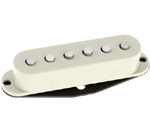
VFS-1